
Lack of sleep affects us in many ways, from weakened immunity to poor concentration and low mood. Unfortunately, many ostomates are familiar with this because sleeping with a stoma can be challenging. Some find that appliance issues (such as leakages) at night or anxiety about their stoma disrupts their sleep.
In this guide, we’ll explain everything you need to know about sleeping with a stoma to help you achieve restful, restorative sleep. This includes tips to prevent leaks, the best sleeping positions and how to establish a healthy sleep routine that works for you as you navigate life with a stoma.
How to sleep with a stoma
Taking time to prepare properly before bed can help you sleep more soundly and reduce the risk of stoma problems during the night. Here are our main tips for preparing for sleep with a stoma:
Eat mindfully
If you have a colostomy or ileostomy, try to plan when you eat to avoid a large meal close to bedtime, ideally having your evening meal about 3-4 hours before bed. You may find it helpful to make this meal lighter and your lunch your main meal of the day. Plus, you should try to leave 2 hours between eating any snacks and going to bed. This should help to reduce your overnight output, leading to more peaceful rest. You may also want to avoid foods that cause looser stools, such as those high in fibre.
If you have a urostomy, you may want to avoid drinks that make you urinate more in the evening, such as alcohol and caffeine.
Check our guide to foods to eat with a stoma to find out what foods might affect your output. Keeping a food diary can help you to spot patterns in what causes symptoms.

Empty or change your stoma bag before bed
Make emptying or changing your pouch a part of your nighttime routine. This reduces the chance of your bag becoming too full overnight and can help to reduce any anxiety you may be feeling.
When you are feeling tired, it can be easy to rush this process. Take your time and ensure you have achieved a good seal between your skin and the appliance so that it stays secure during the night.
Prevent stoma leakage at night
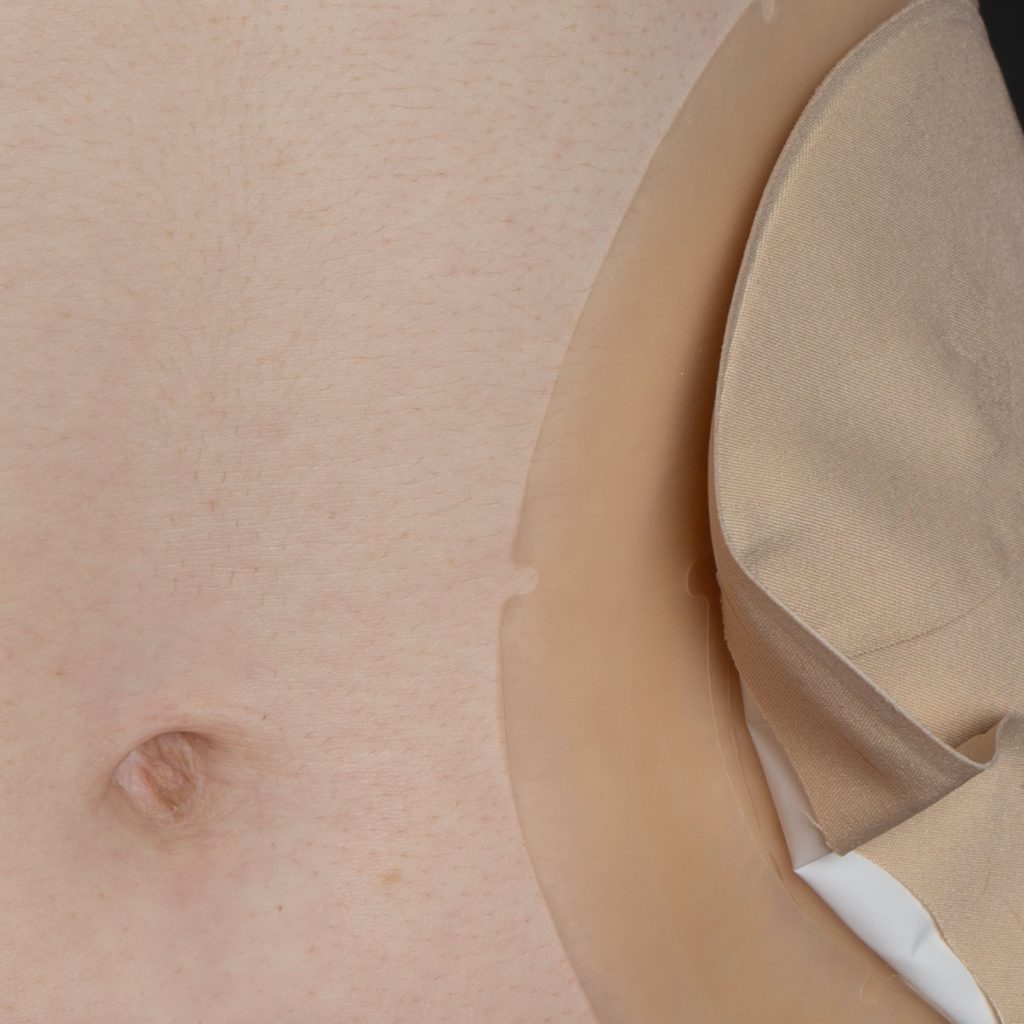
If you experience stoma leakage at night, the problem may be a poor appliance fit. Your stoma should fit snugly into the hole of your baseplate with a small 1mm gap. Remember that your stoma can change size and shape over time, especially if you have a hernia or prolapse, have put on weight or are pregnant. Contact your stoma nurse if you need help remeasuring your stoma.
Remember, you don’t have to stick with the same stoma bag that you were given when you left hospital; you can explore other options if the one you are using causes problems at night, such as leakage.
Products like a flange extender can help to keep your bag secure overnight. If you have dips or creases in your abdomen, a stoma seal can also be helpful. Check our guide to stoma leakage for more information on preventing leaks.
Be prepared for stoma leakage at night
If you are anxious about leaking in the night, this can severely disrupt your sleep. It is true that even if you have taken all of the right steps, leaks can still occasionally happen. Coming to terms with this and taking steps to be prepared can help to put your mind at ease. Keep spare pyjamas, bed sheets and stoma supplies near your bed for easy access should you leak in the night. This will help you to deal with it calmly and quickly.
Wearing loose-fitting pyjamas that cover your pouch is a good first line of defence against leaks. Try using a waterproof mattress cover and/or an incontinence sheet or puppy pad on the bed to give you peace of mind that if a leak does happen, it will be easier to manage. Plus, opting for dark sheets that disguise stains will save the hassle of throwing them away if they get soiled.
Best sleeping positions with a stoma
Finding a comfortable sleeping position is important for a good night’s rest. Don’t worry – you can’t harm your stoma by accidentally lying on it. However, certain positions can increase the risk of a leak due to increased pressure on your appliance. This changes from person to person depending on where their stoma is positioned. It may take trial and error, but you will eventually find a position that works for you and your stoma.
Extra pillows can help you keep a suitable sleeping position. Special pillows such as body pillows, V-shaped pillows, maternity pillows or wedge pillows can provide additional comfort and support where you need it.
Can you sleep on your back with a stoma?
Sleeping on your back is often considered the best position for ostomates as it puts no pressure on your stoma bag. Some ostomates prefer sleeping on a reclining chair or propping themselves up with pillows because they struggle with sleeping flat on their back.
If sleeping on your back causes pancaking issues (where output gets stuck at the top of your appliance), you could try putting a piece of rolled-up tissue inside your bag before bed to help create airflow. Find out more in our guide to pancaking.
These guidelines will be different if you are recovering from Barbie butt surgery/proctectomy – read our dedicated guide to Barbie butt surgery here
Can you sleep on your side with a stoma?
You should be fine to sleep on your side. If you sleep on the side of your stoma, the mattress will support the bag as it fills. If you sleep on the other side, you could use a pillow to support the weight of the bag as it fills during the night.
Can you sleep on your stomach with a stoma?
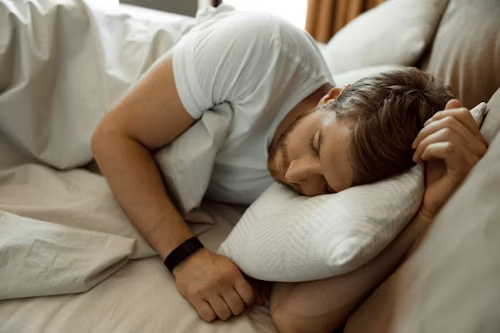
If you like to sleep on your stomach, it will be fine at first, but it could become problematic as your bag fills during the night. You could try bending your leg on the side of your stoma to create some space for the bag to fill.
Sleeping with a stoma – appliance management
How you manage your stoma appliance during the night can make a big difference to your sleep quality.
Avoid overfilling
Try not to let your stoma bag become too full during the night, as this can lead to a leak. However, everyone’s stoma is different, and you may find that you can make it through to the morning without needing to empty/change your appliance.
You may want to set an alarm to wake you up in the night to change/empty your bag if you find it fills quickly. Many ostomates find that over time, they develop almost a sixth sense of when their bag needs changing and their body wakes them up naturally.
Use a high-output bag
If your stoma is particularly active at night, consider using a high-output bag. These larger capacity bags can help you sleep through the night without needing to wake up to empty. Speak to your stoma nurse about these.
Urostomy patients can use a night drainage bag to avoid having to empty during the night. This is connected to your urostomy bag via a tube and can be propped up by a stand. Read the Urostomy Association’s guide to night drainage for detailed information.
Managing gas
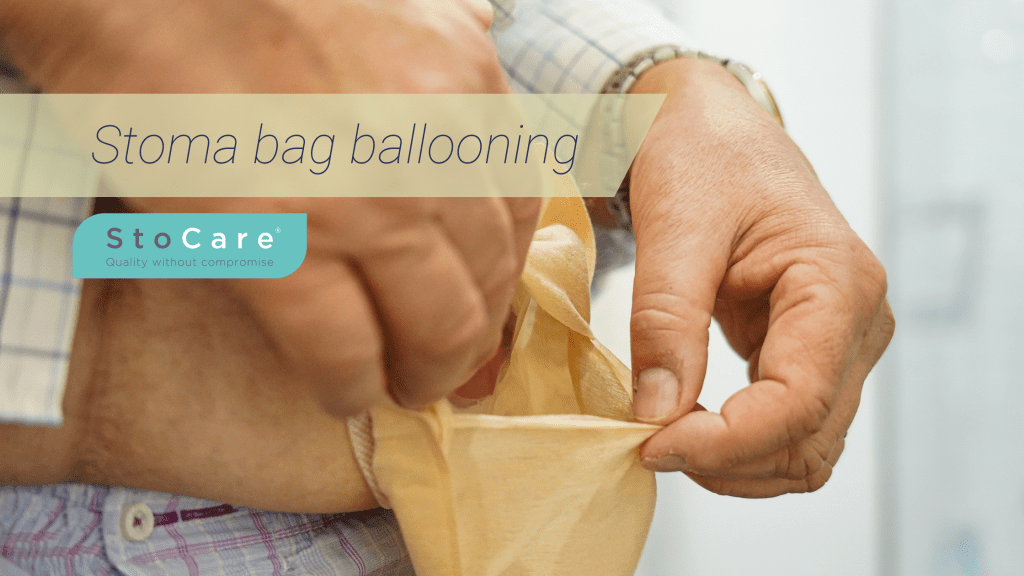
It’s not uncommon for people with a colostomy or ileostomy to wake up to a bag full of gas (also known as ‘ballooning’). You can gently ‘burp’ your appliance and allow the gas to escape if you have a two-piece or drainable bag, without having to get out of bed. Just be careful not to accidentally cause a leak; sitting up to do it may help.
To reduce ballooning, avoid foods that are known to cause gas. See our full guide to ballooning for more information.
General advice for sleeping with a stoma
Beyond managing your stoma itself, there are general sleep hygiene practices that can help you get a better night’s rest:
- Establish a strong sleep routine – try to go to sleep and wake up at regular times, even at weekends. This helps regulate your body clock and improves sleep quality over time.
- Wind down before bed and try not to use screens for at least an hour before sleep. Instead, why not read a book or try meditating?
- You could also try journaling to rid your brain of any worries before you settle down for the night.
- Create the right environment – your bedroom should be dark, quiet and between 18-24 degrees for optimal sleep. Consider blackout curtains or an eyemask if light is an issue, and earplugs or white noise if you’re disturbed by sounds.
- Don’t drink caffeine late in the day, as it can stay in your system for hours and disrupt your sleep.
- Avoid napping too late in the day or for longer than 30 minutes.
- Most adults need 7-9 hours of sleep per night, but listen to your body and adjust accordingly.
When to seek help for sleeping with a stoma
You may struggle to get a good night’s rest soon after your surgery; this is normal and will improve over time. Your stoma should settle in size, produce less gas and be easier to manage as you learn how your stoma behaves and develop a routine.
Speak to your stoma nurse if you are struggling to sleep because of your stoma. They may recommend over-the-counter treatments to slow down your stoma output overnight if it is becoming problematic. They can also help you to choose the right stoma products. Don’t put it off – sleeping well is essential to your health.
Conclusion
Getting a good night’s sleep with a stoma is absolutely possible with the right preparation and routine. While it may take some adjustment in the early days, most ostomates find that sleep becomes easier as they get to know their stoma and what works best for them.
Remember that everyone’s stoma is different, so what works for one person may not work for another. Be patient with yourself as you find your own routine, and don’t hesitate to reach out to your stoma nurse for personalised advice. Sweet dreams!
Although all our articles are written alongside qualified medical professionals, this information is for guidance only and does not replace advice given by your healthcare advisors.