Access to suitable toilet facilities is something many of us take for granted, but for people with a stoma, finding an appropriate bathroom can be a source of real anxiety. With roughly 1 in 340 people in the UK living with a stoma, this is an issue that affects thousands of people every day. Stoma-friendly toilets are designed to help ostomates use public facilities with dignity and ease, making it possible for them to live their lives with confidence.
What is a stoma?
To understand the need for stoma-friendly toilets, a good place to start is understanding what a stoma is. A stoma, also known as an ostomy, is a surgically-created opening to divert faeces or urine into an appliance which is attached to the abdomen by an adhesive. Anyone of any age can have a stoma for a variety of reasons, and often, you can’t tell someone has one.
People with a stoma (also known as ‘ostomates’) cannot control when it is active, so they need to empty or change their pouch at regular intervals. This is why having access to stoma-friendly toilets is so important.
Learn more in our guide to what is a stoma.

Why do we need stoma-friendly toilets?
A stoma-friendly toilet helps people to change their stoma bag easily and with dignity. Being able to use the toilet is a basic human right. People with stomas may need to change their appliance urgently, and can struggle to do so in a standard public toilet cubicle. This might be because:
- They are not able to wait in a queue
- They need more space in order to use their stoma supplies
- They need easy access to facilities not present in normal loos (such as a sink or bin)
- They feel worried or embarrassed about emptying/changing their appliance in a public setting
Without the confidence that there will be a suitable facility, ostomates can become anxious and isolated. This has a major impact on mental health. Read more: Quality of life in stoma patients
What is a stoma-friendly toilet?
The charity Colostomy UK has driven a successful campaign to make more disabled toilets across the UK stoma-friendly. Disabled loos usually have features to help people with physical disabilities, such as a low sink, handrails and emergency alarms. However, ostomates are often overlooked when designing these facilities; Colostomy UK wants to tackle this.
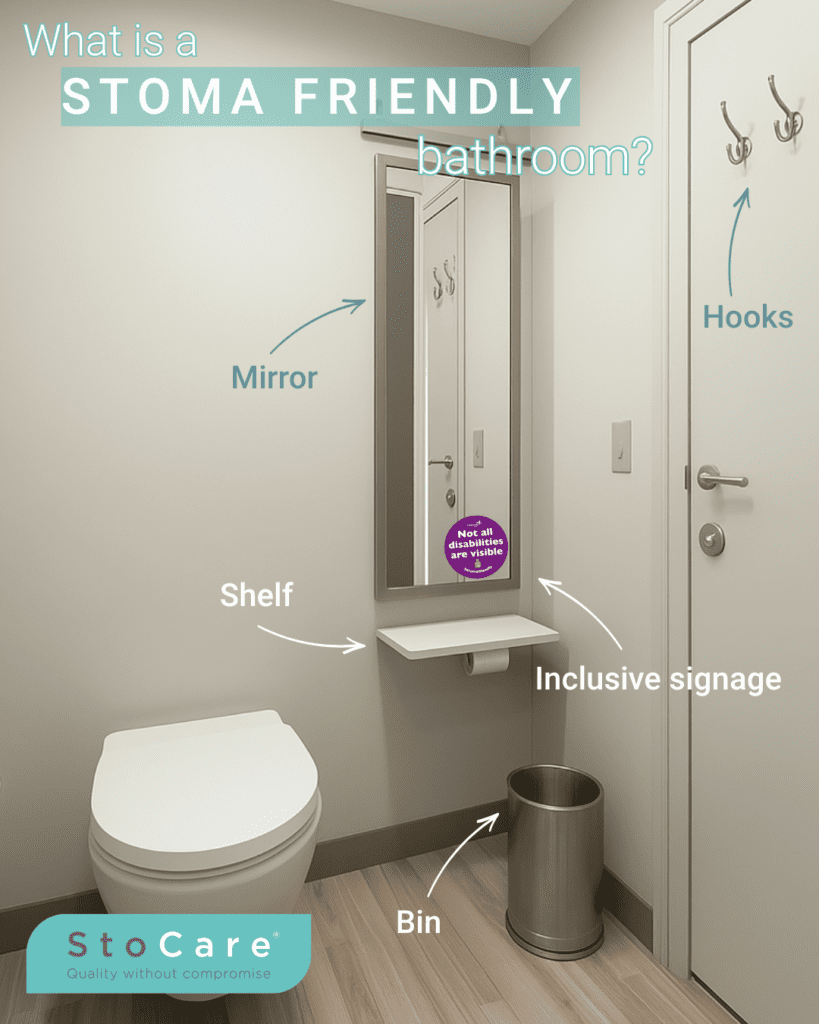
Their guidelines say a stoma-friendly bathroom needs to have:
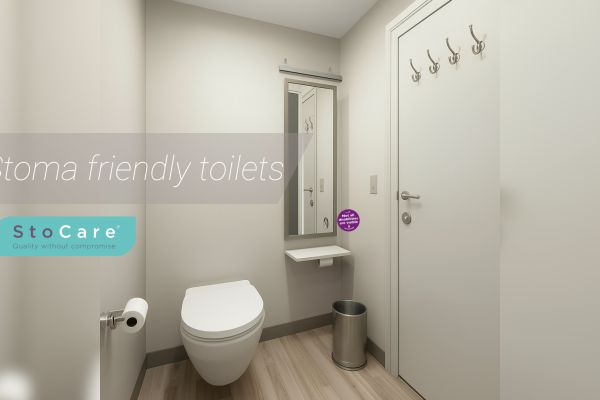
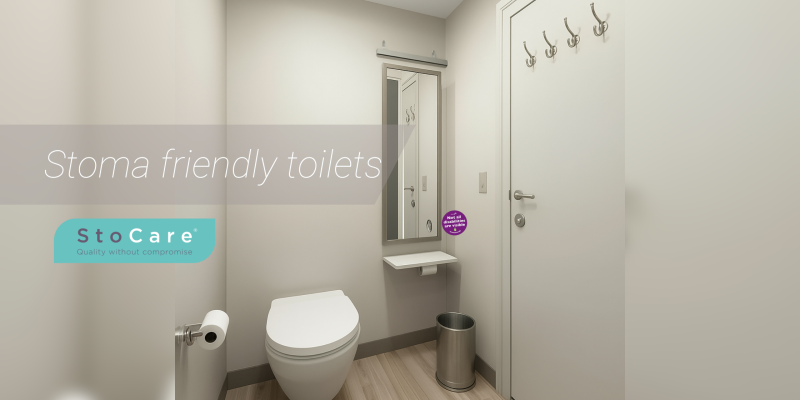
- A full-length mirror, so ostomates can easily see what they are doing
- A clean shelf for laying out stoma supplies hygienically
- Hooks for hanging belongings at a height where items will not touch the floor
- A bin within the cubicle for discreet disposal of stoma products
- Well-stocked essential items such as toilet roll, paper towels and handwash
- Inclusive signage
These changes are minor and inexpensive for organisations but make a huge difference for ostomates.
Inclusive signage is needed because people with stomas are often challenged or even abused for using disabled loos because they don’t ‘look’ disabled. Signage saying something like ‘Not all disabilities are visible’ reminds people to refrain from judgment.

Stoma-friendly toilet sign designed by Colostomy UK
The benefits of stoma-friendly toilets
There are many benefits of embracing stoma-friendly toilets. The primary benefit is enabling stoma patients to easily and comfortably change their stoma appliance when out and about.
Plus, these accommodations are also beneficial for those with different types of continence appliances, such as catheters.
Many organisations have embraced this campaign, including local councils, sports arenas and shops. Often, organisations make the news when they do this (check out an example here), resulting in greater public awareness. This results in less societal stigma and more empathetic understanding of stomas.
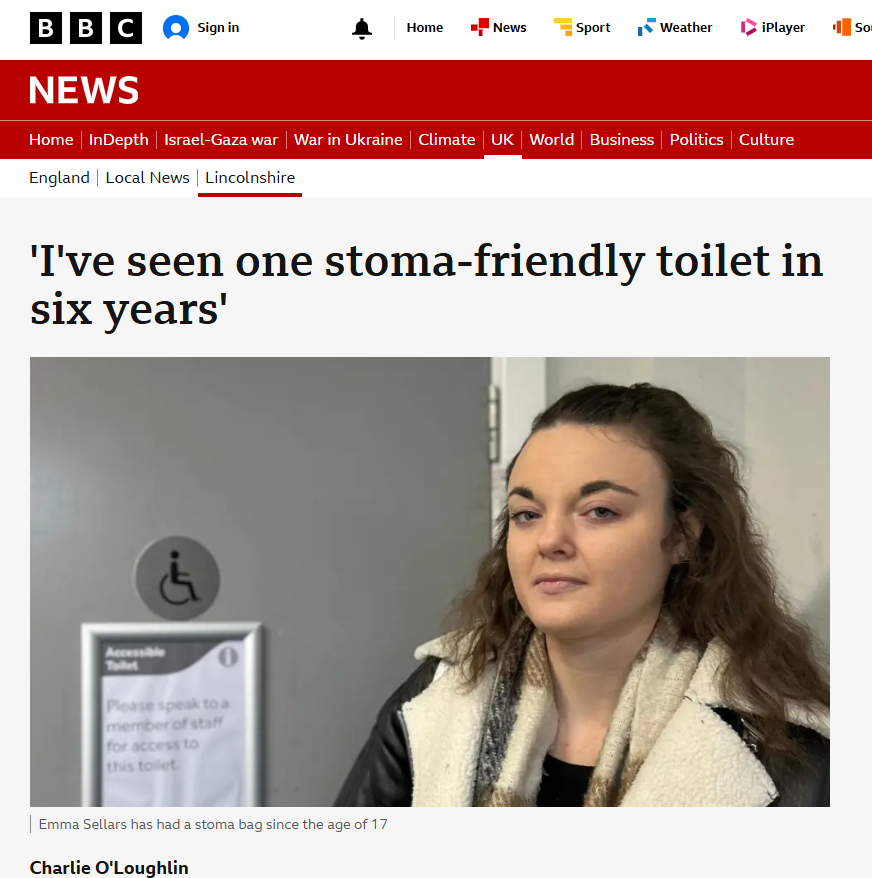
Inclusive signage is helpful for many people, as there are lots of invisible disabilities which may mean someone needs to use a disabled loo.
Unfortunately, disabled loos are often neglected or overlooked. In worst cases, they are used as storage cupboards, unkempt or permanently locked. Some ostomates take to social media to review toilets and encourage organisations to make their facilities more accessible. Public campaigns like these put pressure on organisations, help to raise awareness of these issues and benefit all disabled people.
How to access stoma-friendly toilets
Some disabled loos in the UK are only accessible with a Radar Key. These keys unlock hundreds of loos throughout the UK and are available from charities including Bladder and Bowel Community.
There are several platforms you can use to check whether there will be accessible facilities when you go out:
- AccessAble: Rates whether a disabled loo is stoma-friendly or not
- Changing Places Toilets: Tells you the location of disabled loos and whether you need a Radar Key to access them
Stoma-friendly toilets across the world
Of course, this is just based on standards in the UK. Whether a bathroom is ‘stoma-friendly’ or not may change depending on who you ask. For example, the United Ostomy Association of America has similar guidance to Colostomy UK which you can read here.
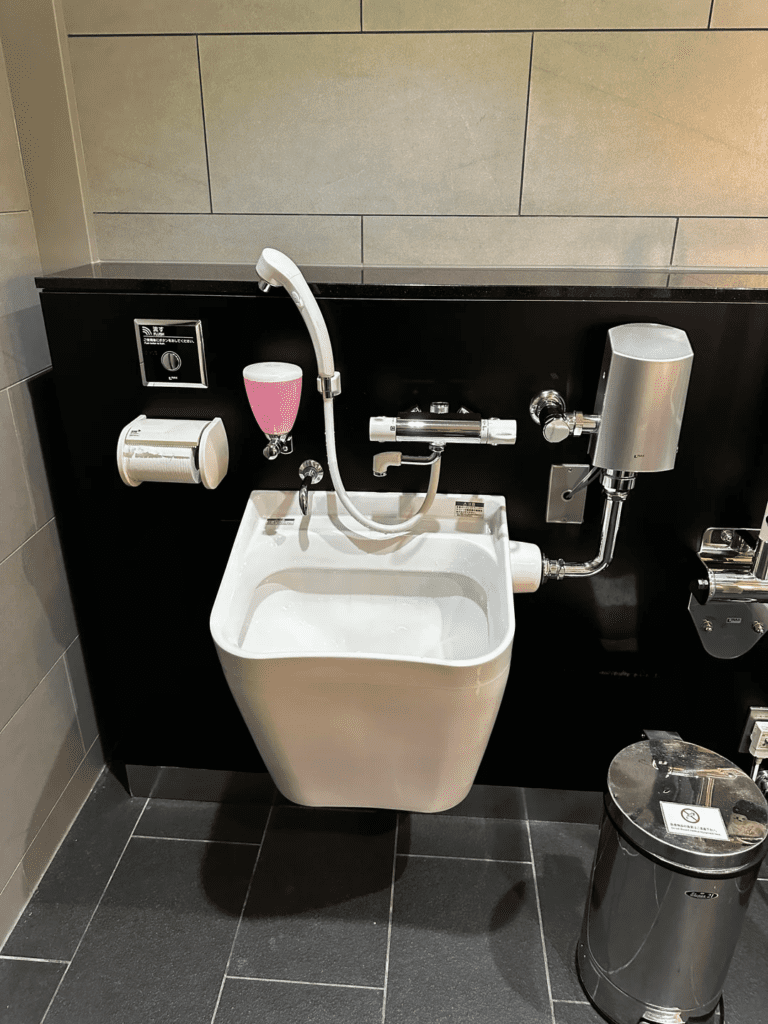
There are many cultural differences, too. In some countries, it is quite normal to come across ‘ostomy toilets’ in public. They are particularly common in Japan. These look a bit like a blend between a sink and a toilet, and are waist-height for easy emptying of a stoma bag. They are connected to running water and have easy access to soap. See example below:
If you are an ostomate and are thinking of travelling internationally, it may be beneficial to research what the facilities are like in the country you are travelling to. You might benefit from a stoma travel certificate which explains your condition in the local language. Find out more in our guide to travelling with a stoma.
Conclusion
Stoma-friendly toilets are an essential part of making public spaces truly accessible. The simple additions championed by Colostomy UK require minimal investment but can transform the daily lives of ostomates, giving them the freedom and confidence to go out without anxiety. As awareness grows and more organisations adopt these standards, we move closer to a society where everyone can access the facilities they need with dignity. If you manage public facilities, consider implementing these simple changes. If you’re an ostomate, resources such as the ones mentioned in this article are there to help you live your life to the full.
Further reading
Laura’s story: Living with two stomas
5 things people with a stoma want you to understand