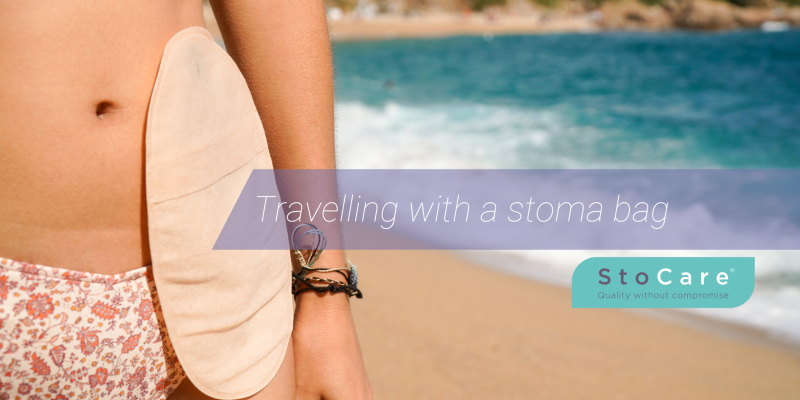
Travelling with a stoma bag can feel daunting, especially the first time after surgery. There are new things to consider, like how you’ll carry your supplies, where you’ll change your appliance, and what to do if you experience a leak. But with careful forward planning, you can travel with a stoma bag without difficulty. In fact, it’s important to get out and about for your mental health.
As long as you feel well enough and have been medically cleared, you can enjoy travelling just as you did before your stoma surgery, whether that’s going on holiday, visiting family or friends or travelling for work. In this guide, we will explore top tips given by ostomates and medical professionals for making travelling with a stoma bag as stress-free as possible.
Click on the links below to skip to a section of the guide:
- Advice for travelling with a stoma bag
- What to pack
- Travel insurance with a stoma
- Air travel with a stoma bag
- Cruises with a stoma bag
- Road or railway trips with a stoma bag
- Hot weather with a stoma bag
- Active holidays with a stoma bag
Advice for travelling with a stoma bag
You will likely be allowed to travel around 4 weeks after stoma surgery but it depends on many factors including your general health, reason for surgery and how well you are recovering. Speak to your stoma nurse or doctor if you are unsure. They can give you advice and they may also be able to give you local stoma nurse contacts at your destination, in case you encounter any problems.
If you’re still regaining confidence, it might help to start small; day trips or weekends away not far from home can be a good place to start.
The day before you travel, it might help to be mindful of what you eat and avoid foods that you know are likely to cause issues. This can help to reduce your stress while you travel if you know your stoma is more likely to behave normally. Learn more: Foods to eat with a stoma
But how do you prepare for your trip and where do you begin with packing? Our step-by-step guide to packing for travelling with a stoma bag will help:
Travelling with a stoma bag: what to pack
- Run through your full stoma pouch change routine and make a note of every item you use.
- Estimate your daily usage, multiply by the number of days you’ll be away, then double it and add a few extras!
- Order all the supplies you will need well in advance. You may need to explain to your GP or DAC why you’re requesting a bigger supply.
- Carry your stoma supplies in a dedicated, easy-to-reach bag. Quick changes are much easier if everything is in one place.
- Pre-cut your bags before you travel. This can make your trip less stressful, plus scissors can be restricted in hand luggage if you are flying.
- Carry a small water bottle with you in case there are no sinks available for cleaning your stoma in between changes.

- If you usually use closed bags, consider taking a few drainable ones. These can be useful if you have a tummy upset, not uncommon when you are eating new foods in a new place. Read more: Ultimate guide to stoma bags
- Keep your product order codes, brand names, and suppliers’ contact details handy and use them if you run low on supplies; they may be able to send you emergency supplies. If abroad, you may have to pay an import fee.
- Don’t forget your usual medications, and think about packing Imodium, Dioralyte, or similar rehydration and anti-diarrhoea medications.
- A stoma travel certificate explaining your condition in the local language may help. See our post on translating stoma related phrases
- Try a stoma seal like the Ostoform FLOWASSIST to increase the wear time of your pouch and reduce the chance of leaks. This means you can choose to change your bag when it suits you.
- If you are worried about disposing of your bags, pack small disposable bags to seal used pouches before putting them in the bin.
- Take loose-fitting pyjamas that cover your pouch as a first line of defence against leaks at night. You may also want to take a small waterproof mattress protector or puppy pads to protect linen if you are worried.
- If you are anxious about odour when changing in public, you can purchase sprays/gels/sachets to disguise any smells.
If you run out of stoma supplies while you are away, local pharmacies might help, but also try local hospitals. They may not have the exact same products that you use but may be able to give you emergency supplies to keep you going.
Read more: Colostomy UK holiday checklist
Travel insurance with a stoma
Travel insurance is important and even more so when you have a health condition. You do have to declare a stoma on travel insurance. You should also declare the medical condition that led to it. Undeclared conditions can void your claim.
When choosing a travel insurance provider, check the coverage, not just the cost. Look for policies that cover:
- Pre-existing conditions
- Medical equipment and supplies
- Emergency hospital visits
Colostomy UK and Urostomy Association both have a list of insurance companies that they recommend for ostomates. However, be sure to do your own research as this information may be outdated.
Air travel with a stoma bag
Travelling abroad with a stoma might seem as if it would be full of obstacles and difficulties, but in reality, there’s nothing to stop ostomates from flying and visiting new countries. Follow our top tips and you will be well prepared for air travel with a stoma bag:
- Contact your airline in advance. Ask about:
- Extra baggage allowance for medical supplies. They may ask to see a letter from your GP to explain your need for this.
- Rules around medical supplies such as liquids and sharp items (e.g. sprays, scissors) in hand luggage. You may be able to take more than 100ml of liquid in your hand luggage if there is a prescription label on the item, and some airlines allow sharps under a certain size, but check first.
- Preferred seating (aisle seats, near toilets). Some airlines allow you to choose your seats if you check in early.
- If medical sprays like adhesive removers aren’t allowed, wipes could be a safer bet.
- Give yourself plenty of time to get to the airport and through security to reduce stress and allow for as many appliance empties/changes you may need.
- You may want to wear a Sunflower Lanyard for hidden disabilities – it can help airport staff understand that you may need assistance.
- Security scanners may flag your bag, especially more modern ones, but security staff will be understanding of your condition. They may ask you to show them your bag and explain what it is. You can request to do this in private.
- You may feel more comfortable if you empty or change your pouch just before security.
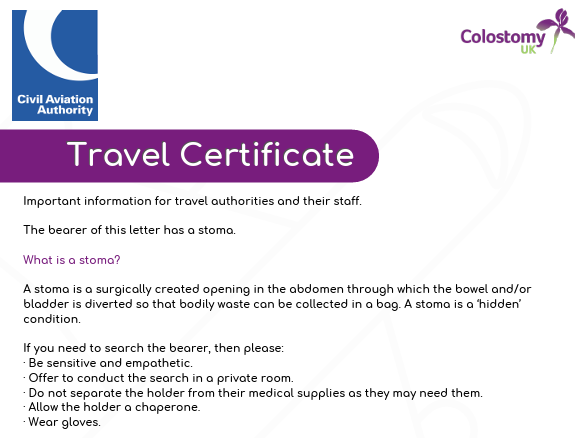
- Get a free stoma travel certificate from Colostomy UK. It explains your condition to airport staff but needs to be signed by a GP to be considered valid. You can download one here.
- Most supplies should go in your hand luggage, in case your checked bag goes missing and for easy changes in the airport/when flying.
- Ask a travel companion to carry some supplies for you if you’re short on space.
- Taking supplies out of their boxes will help to save space.
- You may also want to take a change of clothes in your hand luggage in case of leaks.
- Flying should not affect your stoma bag. It’s a common concern for ostomates but don’t worry – the cabin pressure won’t make your stoma bag balloon or explode.
Ostomate Harvey, who has visited 15 different countries after stoma surgery, said:
“At the airport, most of the time they’re pretty nice. I clip my bag with all my stoma items to my hand luggage and I just tell them it’s medical. They might pat you down manually if you don’t want to go through the scanner. They’ll take you into a side room if that’s what you want.”
Cruises with a stoma bag
Travelling by boat is also very possible with a stoma bag. Here are our tips for going on a cruise with a stoma bag:
- Familiarise yourself with onboard toilet locations early on. As an ostomate, you are entitled to use disabled loos.
- Find out the location of the medical team and how to contact them.
- Don’t assume the ship’s medical team will have stoma supplies – take plenty of spares.
- Double-check your insurance is sufficient for your whole journey, including coverage for all of your stops.
- You may want to take a travel certificate in multiple languages, depending on where your cruise stops.

Road or railway trips with a stoma bag
You can reach any number of destinations by car, bus or train – even abroad. A few little steps can help to make this easier:
- If you’ve recently had stoma surgery and you’re planning on driving, make sure you’re cleared by your doctor.
- You may need to inform your car insurer about your stoma.
- Plan your route with toilet stops in mind: railway stations, motorway services, cafés, hotels, etc.
- You may want to avoid foods or drinks that are more likely to cause high output to reduce the chance of emergency stops being needed.
- A high-volume bag or night drainage bag might help if you’re worried about delays.
- For UK travel:
- Purchase a RADAR key to access disabled toilets, available from Colostomy UK and elsewhere.
- Get an identity card or Can’t Wait card to explain your need for facilities.
- If travelling by train, some train lines allow you to reserve a seat near a toilet.
- Pack plenty of fluids and snacks.
- Do not leave your supplies in a hot car for extended periods of time as heat can cause them to degrade.
- Having a stoma does not make you exempt from wearing a seatbelt. Think about wearing a stoma protector if you’ll have a seatbelt pressing on your abdomen for long periods.
- Loose, comfortable clothing can make all the difference on long journeys.
Hot weather with a stoma bag
Many of us enjoy getting away to find the sun, but what impact will this have on you as an ostomate?
- Ostomates are particularly at risk of dehydration, so in hot weather, hydrate more than usual and drink bottled water unless you’re sure the tap water is safe.
- Electrolyte drinks or sachets can be helpful.
- Be aware that sweat may cause your bag to not stick as well to your skin. You may need to change your pouch more often. Barrier film spray or wipes can help with this.
- People with a stoma can swim in a pool or the sea and sunbathe, just like before surgery. You may want to use flange extenders to help secure your bag to your skin. Read our full guide to swimming with a stoma
- Apply and reapply sun cream as needed, seek shade and wear sunglasses and a hat. You may end up with a stoma bag tan line!
- Avoid applying oily products around the stoma bag as this can affect the adhesion.
- Many stoma brands offer discreet or foldable bags which you may prefer.
- You may want to try stoma-friendly swimwear from specialist brands. Examples: Whiterose, Vanilla Blush and CUI Wear. However, you can wear all the same clothes you wore before your stoma surgery as long as you are comfortable.
- Ensure your peristomal skin is completely dry before applying your new pouch.
- Store stoma bags somewhere cool (a cool bag or insulated pouch is ideal). Extreme heat causes them to degrade.

Harvey, who has an ileostomy, said: “In hot countries, my bags peel off. I need to change them more often, sometimes twice a day with going swimming. My stoma also swells in the heat, so I take my scissors with me and cut the baseplate to a bigger size. Sometimes I get sweat rashes around the bag, so I always take scalp lotion which does the trick.”
Active holidays with a stoma bag
Heading out to do something fun and adventurous? Don’t let your stoma bag stop you! You can do anything you enjoyed before such as skiing, hiking, swimming, water sports, cycling, theme parks, etc. You may want to use flange extenders to increase the security of your appliance while being active. Make sure you ask for advice from your stoma nurse if you have recently had surgery. They may recommend that you wear a support garment or stoma protector to keep your stoma safe and help prevent a parastomal hernia. Harvey has designed his own stoma support belts which you can check out here.
Find out more in our guide to living with a stoma
Conclusion
Travel after stoma surgery might feel overwhelming at first, but it’s absolutely doable and worth it. Preparation makes all the difference and small confidence-building steps can help ease you into it.
Although all our articles are written alongside qualified medical professionals, this information is for guidance only and does not replace advice given by your healthcare advisors.
Further reading
Quality of life in stoma patients
5 inspirational women with stomas (and their advice)