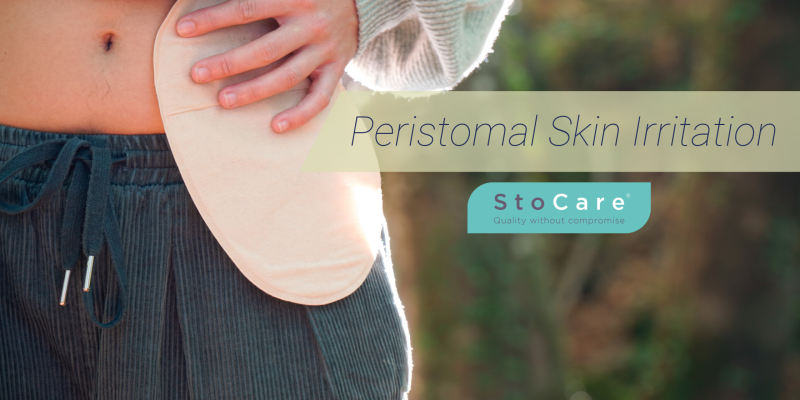
The skin around your stoma, known as peristomal skin, works hard. Every day, it can come into contact with stoma output, adhesives, moisture and repeated pouch changes.
Healthy peristomal skin is an important part of a comfortable and secure stoma routine. Irritated or damaged skin can make wearing your pouch uncomfortable and may even make it more difficult to get a good seal.
So, what can cause skin irritation around a stoma – and what can you do to help protect your peristomal skin?
What does healthy skin around a stoma look like?
Ideally, the skin around your stoma should look similar to the rest of the skin on your abdomen. It should be intact, comfortable and free from persistent redness or soreness.
Common peristomal skin irritation causes
1. Stoma output and moisture exposure
One of the most common causes of peristomal skin irritation is exposure to stoma output or other related moisture.
Faecal output contains digestive enzymes that can irritate the skin, particularly if it is loose or liquid. With a urostomy, urine can also cause problems if it remains against the skin for prolonged periods.
This type of reaction on peristomal skin is known as Moisture-Associated Skin Damage (MASD).
What is MASD?
MASD happens when the skin is exposed to moisture for a prolonged or repeated period. In stoma care, this can include exposure to:
- Urine
- Faecal output
- Mucus
- Wound or fistula drainage
- Sweat
When the skin becomes overly moist, its natural protective barrier can become weakened. This can leave it more vulnerable to irritation and damage.
Leaks are therefore particularly important to address. If moisture is repeatedly getting underneath your pouch, protecting the skin alone won’t solve the underlying problem – you’ll also need to look at why the leakage is happening.
2. Repeated adhesive removal
Changing your pouch is an important part of stoma care, but repeatedly removing adhesive from the same area can put stress on the skin.
Pulling an adhesive appliance away from the skin can remove some of the outermost skin cells – the skin’s natural barrier – with it. Over time, repeated mechanical stress can leave skin feeling sore, raw or fragile.
This is known as Medical Adhesive-Related Skin Injury (MARSI).
What is MARSI?
MARSI describes skin damage caused by medical adhesives.
For people with a stoma, repeated application and removal of pouching systems can increase the risk of adhesive-related skin injury.
MARSI can include:
- Redness
- Skin tears
- Blistering
- Superficial skin loss
- Soreness or pain
3. Incorrect appliance fit
Your pouching system should fit closely around your stoma.
If the opening is too large, more skin may be left exposed to stoma output. If it’s too small, it can rub against or put pressure on the stoma. Gaps around the seal can also allow output to get underneath the appliance and onto your skin.
4. Products that irritate the skin
Some soaps, cleansers, moisturisers, fragrances and other skincare products can irritate sensitive peristomal skin or leave behind a residue that affects how well your pouch sticks.
Alcohol-containing ostomy products may also cause stinging or dryness for some people.
Always check whether a product is suitable for use around a stoma.
5. Allergic or sensitivity reactions
Some people may develop a reaction to an ingredient or material in an adhesive, pouching system or accessory. This can cause redness, itching, burning or a rash.
Allergic dermatitis – a true allergic reaction to the hydrocolloid or adhesive in the appliance – is very rare. Instead, it may more likely be contact dermatitis from other irritants listed above.
However, if you notice a persistent reaction that seems to correspond with a particular product, speak to your stoma care nurse before self-diagnosing the cause or changing products yourself.
6. Fungal or bacterial skin problems
Not every change in the skin around a stoma is caused by your stoma or your stoma care routine. Fungal or bacterial infections can also cause redness, soreness, itching or changes to the skin.
If you’re unsure what is causing your symptoms, a stoma care nurse or healthcare professional can help identify the cause and recommend appropriate treatment.
How can you help prevent peristomal skin irritation?
A few simple changes can help support healthy skin around your stoma:
Remove your pouch gently
Avoid pulling the adhesive quickly or aggressively. A medical adhesive remover can help make removal easier.
Clean your skin carefully
Follow the advice you’ve been given by your stoma care nurse on how to clean your stoma and avoid products that may irritate your skin.
Keep an eye out for leaks
If you’re regularly experiencing leaks, don’t simply put up with them. Your stoma care nurse can help you review your appliance and find ways to improve your fit.
Consider a barrier film
A barrier film can provide an additional layer of protection against moisture and the repeated application and removal of adhesives.
Give your skin time to recover
If your skin is already sore or damaged, be particularly gentle during pouch changes and seek professional advice if the problem doesn’t improve.
Protecting your skin, one pouch change at a time
Looking after the skin around your stoma doesn’t have to mean adding lots of complicated steps to your routine. Understanding what may be causing irritation is a good place to start.
If your skin is persistently sore, broken, weeping, itchy or discoloured, or you’re unsure what’s causing the problem, speak to your stoma care nurse or another healthcare professional. They can help identify the cause and recommend appropriate treatment.
Remember: This information is for guidance and does not replace advice given by your healthcare professional.