Looking after the skin around your stoma is an important part of your ostomy routine. The skin around your stoma, known as peristomal skin, can often be exposed a range of irritants which can affect its natural protective barrier.
A consistent skin protection routine can help you keep the area clean, dry and protected, whilst also potentially reducing some of the factors that can contribute to irritation and leakage.
Everyone’s stoma and surrounding peristomal skin is different, so you may need to adapt your routine depending on your needs and the type of appliance you use. If you regularly experience soreness, broken skin, bleeding or leakage, speak to your stoma care nurse for personalised advice.
Here’s a simple step-by-step routine to follow when changing your ostomy appliance.
1. Remove your previous appliance gently
Start by carefully removing your existing pouch and baseplate.
Repeatedly pulling or stripping an adhesive appliance from the skin can cause irritation and, in some cases, medical adhesive-related skin injury (MARSI). Taking your time and using a medical adhesive remover can help make appliance removal gentler.
A medical adhesive remover spray can help to loosen adhesive from the skin, allowing you to remove the appliance more comfortably without unnecessarily pulling at the skin.
Spray the adhesive remover underneath the edge of the baseplate as you gently peel it away. Avoid rushing or pulling the appliance off quickly.
Tip: If you’re already concerned about skin irritation, look for alcohol- and fragrance-free medical adhesive removers, or discuss this with your stoma nurse.
2. Clean around your stoma
Now that your appliance has been removed, use soft dry wipe to gently remove any remaining moisture or stoma output from the skin.
For most routine appliance changes, you don’t need special cleansers or soaps. If the area needs more of a clean-up, use lukewarm water and a soft dry wipe. There’s also no need to scrub the skin – gently clean around the stoma, taking care not to rub or irritate the area. For any stubborn adhesive residue, use additional adhesive remover spray or a new wipe.
It’s important to avoid leaving soap or other cleansing products on the skin, as residue can interfere with the adhesion of your next appliance.
Once you’ve finished cleaning, make sure the skin is completely dry before moving on to the next step. Moisture underneath an adhesive appliance can affect how well it sticks and may contribute to skin problems.
3. Consider a barrier film
When your stoma and surrounding skin is clean and completely dry, some ostomates apply a barrier film.
Barrier film creates an additional protective layer between your peristomal skin and potential irritants, including moisture, stoma output and repeated adhesive removal.
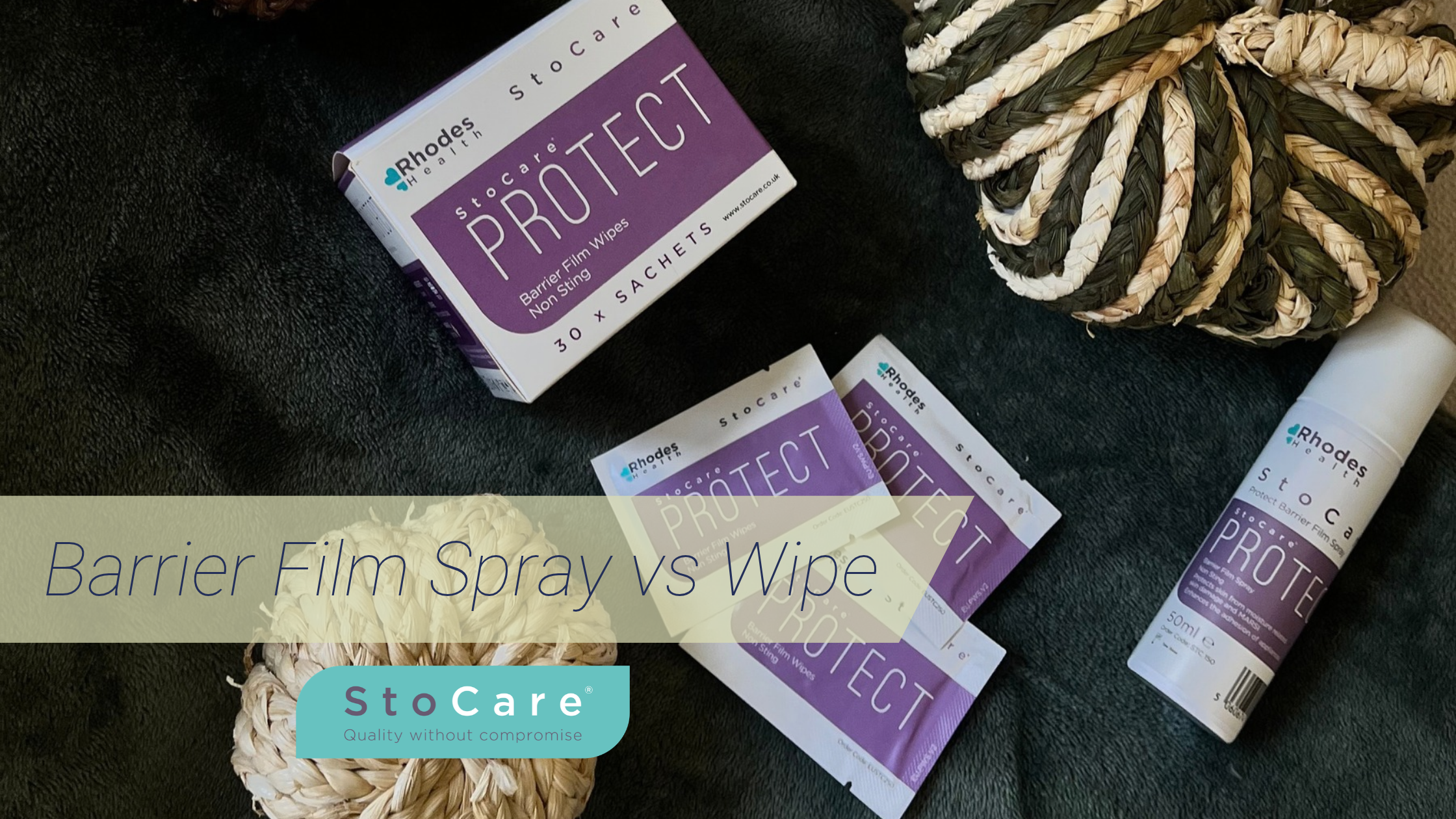
You can choose between a barrier film spray or wipes, depending on your preference and what works best for your routine.
To apply the barrier film around the stoma, follow the instructions for your chosen product, and, most importantly, allow the barrier film to dry completely before applying your appliance. Applying an adhesive appliance while the barrier film is still wet can affect adhesion.
Remember: A barrier film isn’t intended to replace good ostomy care – it works alongside your routine to provide an additional layer of protection.
4. Consider a barrier seal
If needed, a barrier seal can provide an additional layer of protection around the stoma and help create a more secure seal between your peristomal skin and your appliance.
Barrier seals can help fill small gaps and create a closer fit around the stoma and the baseplate, helping to reduce the opportunity for output to come into contact with the surrounding skin.
Additionally, some systems are designed to help direct stoma output away from the skin. The Ostoform FLOWASSIST Seal features a patented technology designed to help direct output away from the skin and towards the pouch.
5. Apply your ostomy appliance
Now it’s time to apply your new appliance.
A skin-friendly hydrocolloid baseplate can help protect your peristomal skin whilst providing a secure surface for your pouch. Hydrocolloid materials are commonly used in ostomy appliances because they are designed to interact with moisture whilst maintaining adhesion.
What’s more, finding an appliance that fits well around your stoma is just as important as the material it’s made from. A good fit can help minimise gaps around the stoma and reduce the risk of output getting underneath the baseplate or rubbing on your peristomal skin.
The Ostoform FLOWASSIST 2-Piece Pouch System combines a skin-friendly hydrocolloid baseplate with a two-piece design, meaning the baseplate can remain in place whilst the pouch is changed – reducing the amount of adhesive removal included in your ostomy care. It also incorporates FLOWASSIST technology designed to prevent leaks by directing output away from the skin and into the pouch.
6. Repeat at every appliance change
Good peristomal skin care isn’t a one-off. It’s about creating a routine that you can repeat every time you change your appliance.
A simple routine of remove, clean, protect, seal and apply can help you make skin protection part of your everyday ostomy care.
It’s also worth taking a moment to look at your skin during each appliance change. Healthy peristomal skin should generally look similar to the skin elsewhere on your abdomen.
If you notice persistent redness, soreness, itching, weeping, broken skin, bleeding or other changes, don’t simply try to cover it up with your next appliance. Speak to your stoma care nurse, who can help identify the cause and recommend appropriate treatment.
Optional steps for your routine
Not everyone needs additional products, but there are situations where your routine may benefit from an extra step.
Barrier cream
If your skin needs additional moisturisation alongside protection, you may be advised to use a barrier cream rather than a film.
It’s important to choose an ostomy-friendly barrier cream that is non-greasy and specifically designed to be used alongside adhesive appliances. Greasy or unsuitable products can interfere with adhesion and make it harder for your baseplate to stick securely.
Stoma paste
Stoma paste is a medical skin-filler and caulking product that can be used to help smooth uneven areas of skin around the stoma.
If you have skin folds, scars, dips or other uneven areas around your stoma and peristomal skin, stoma paste can help fill these spaces and create a smoother surface for your baseplate. This can help reduce the chance of ostomy output getting underneath the baseplate and causing irritation.
Stoma paste isn’t a glue and shouldn’t be used to stick your appliance down. Instead, it’s used to help create a more even surface and improve the seal around the stoma.
Building a routine that works for you
Everyone’s ostomy care routine will look a little different. Whilst you should always use a medical adhesive remover, dry wipes and a new appliance, you may not always – or ever – need a paste, barrier or seal. But this wholly depends on your individual stoma.
The key is to protect your skin at every stage: remove your appliance gently, clean without irritating the skin, keep the area dry, add protection where needed, create a good seal if necessary, and choose an appliance that works for your body.
Important: You shouldn’t have to accept sore skin or frequent leaks as simply being part of life with a stoma. If you’re struggling with either, your stoma care nurse can help you find the right products and routine for your individual needs.
Remember: This information is for guidance and does not replace advice given by your healthcare professional.