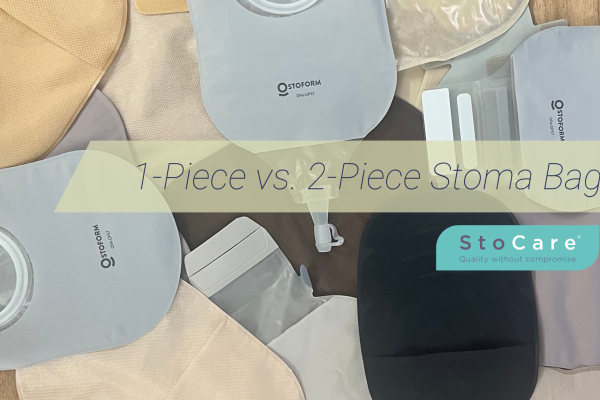
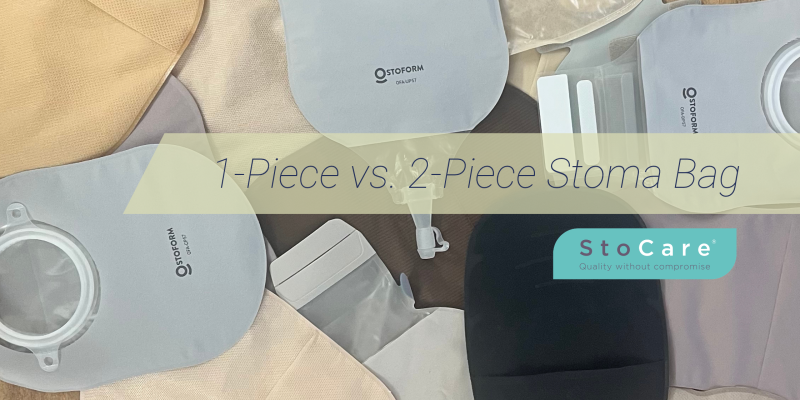
If have a stoma, you may already be aware that there are different types of stoma bags available. But, if you’re a new ostomate, or are simply exploring whether a different appliance might work better for you, you may have come across two common options: 1-piece and 2-piece stoma bag systems.
Both are designed to collect your stoma output securely and help protect the skin around your stoma (known as peristomal skin). However, the way they attach to your body, how they are changed and how often you need to replace different parts can vary.
So, what’s the difference between a 1-piece and a 2-piece stoma bag? And how do you know which might be right for you?
What is a 1-piece stoma bag?
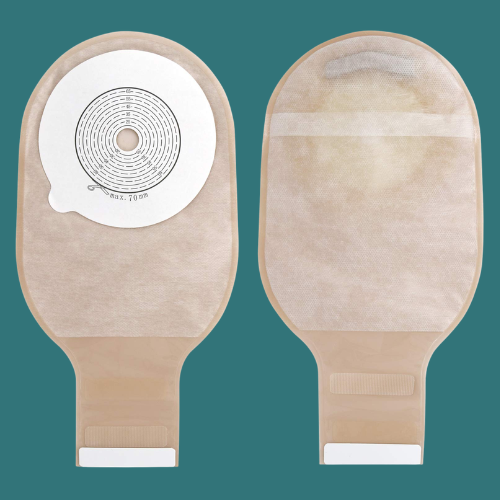
A 1-piece stoma bag is an all-in-one appliance where the adhesive baseplate (the part that sticks to your skin) and the pouch (the part that collects your stoma output) are permanently joined together.
This means the entire appliance is applied and removed as one unit. When it’s time to change your stoma bag, you remove the whole appliance and replace it with a new one.
1-piece systems are available in different shapes, sizes and designs to suit different stomas and individual needs.
Because the baseplate and pouch are combined, there’s no need to connect separate components. For some people, this makes a 1-piece system a straightforward and convenient option.
What is a 2-piece stoma bag?
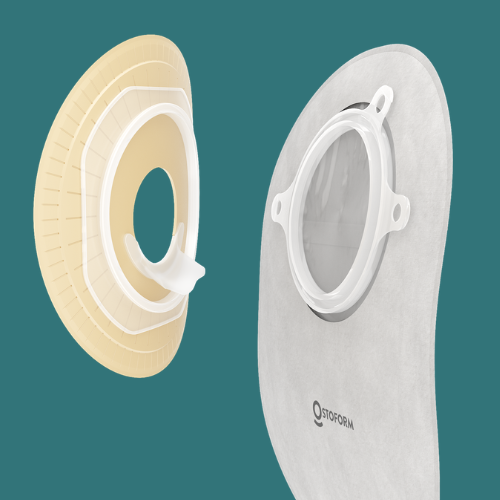
A 2-piece stoma bag system consists of two separate parts: the adhesive baseplate and a removable pouch.
The baseplate is attached to the skin around your stoma, whilst the pouch connects to it using a specially designed coupling mechanism. Depending on the appliance, this may involve a click coupling or an adhesive coupling.
Unlike a 1-piece, the pouch can often be removed and replaced without taking the baseplate off your skin, depending on the coupling mechanism. This means you can leave the baseplate in place for longer, changing the pouch as needed – resulting in fewer adhesive removals, which may help reduce irritation and damage to the skin around your stoma.
Most 2-piece systems use drainable or urostomy pouches, which can be emptied while attached to the baseplate. You can then continue using the same pouch until you’re ready to replace it. However, closed pouches are also available.
Comparison: 1-piece vs. 2-piece stoma bags
Although both pouching systems essentially perform the same essential function – to collect your stoma output – there are some important differences to consider.
Here’s a quick comparison:
| Feature | 1-piece system | 2-piece system |
| Design | Baseplate and pouch joined together | Separate baseplate and pouch |
| Application | Applied as one appliance | Baseplate and pouch attached separately |
| Changing the pouch | Entire appliance must be removed | Pouch can often be changed independently |
| Baseplate changes | Changed with every appliance change | Can often remain in place across multiple pouch changes |
| Skin contact | Adhesive removed with each appliance change | Fewer adhesive removals may be needed |
| Components | One combined product | Separate baseplates and pouches |
| Storage | Fewer separate components | Separate pouches and baseplates to store |
1-piece stoma bags: Pros and cons
Potential advantages:
Simple application
With the pouch and baseplate already joined, there’s only one part to position and apply.
Low-profile design
Many 1-piece appliances sit closer to the body, which some people prefer under clothing.
Straightforward changes
When it’s time to change your appliance, you simply remove the whole bag and replace it.
Fewer components
You only need to keep one type of appliance to hand, rather than separate pouches and baseplates.
Potential disadvantages:
More frequent adhesive removal
Every time you change your appliance, the adhesive baseplate needs to be removed too. Frequent removal may contribute to medical adhesive-related skin irjury (MARSI).
Less flexibility
You cannot replace the pouch independently if you want a fresh one without changing the entire appliance.
More appliances needed
As the whole unit is replaced each time, you may use more complete appliances compared with a 2-piece system.
2-piece stoma bags: Pros and cons
Potential advantages:
Fewer adhesive removals
If you can leave the baseplate in place whilst changing the pouch, you can reduce repeated stress on the surrounding skin from adhesive removal.
Flexible pouch changes
You often can remove and replace the pouch independently, without having to change the baseplate every time. This can make pouch changes much quicker and easier.
Different pouch options:
Some systems offer a choice of pouch sizes or types that can be used with the same compatible baseplate, meaning you can mix and match what you need – also helpful for those who use both closed and drainable pouches.
Potentially fewer baseplates needed:
If the baseplate can remain in place across multiple pouch changes, you may need fewer baseplates than pouches.
Convenient emptying:
Drainable and urostomy pouches can be emptied while still attached to the baseplate.
Potential disadvantages:
An additional step:
The pouch and baseplate need to be connected securely, which can take a little practice.
More components to manage:
You’ll need to keep separate track of your stock of both pouches and baseplates, especially if you’re using less baseplates than pouches.
May feel bulkier:
Some 2-piece systems can feel more noticeable under clothing.
Connection considerations:
It’s important to make sure the pouch is correctly attached to the baseplate to help prevent leaks. This can be tricker with adhesive couplings, as they do not have an audible or tactile indicator that the pouch is secure.
Skin health:
Whilst less adhesive removal can contribute to a lower risk of peristomal skin irritation caused from taking off the baseplate, it’s important to still check around the skin regularly as leakage and other irritants may still be present.
When is each type of stoma bag best?
There isn’t a one-size-fits-all approach to choosing a stoma appliance. What works well for one person might not suit someone else.
Your stoma care nurse can help you explore the options available and find an appliance that meets your individual needs. Or you can explore the options yourself.
However, there are some situations where you might prefer one system over the other.
When might a 1-piece stoma bag be best?
A 1-piece system may be a good option if you:
- Prefer a simple, all-in-one appliance that’s easy to apply and remove.
- Like having a low-profile bag that sits close to your body.
- Prefer to change your entire appliance at the same time.
- Find connecting separate pouch and baseplate components difficult.
- Want to keep your stoma care routine as straightforward as possible.
For some people, particularly those who are comfortable changing their appliance regularly, a 1-piece system can offer a convenient and reliable solution.
When might a 2-piece stoma bag be best?
A 2-piece system may be worth exploring if you:
- Want to reduce how frequently you remove the adhesive from your skin.
- Experience irritation or soreness from repeated appliance changes.
- Prefer to change your pouch without removing the baseplate.
- Like the flexibility of having separate pouch and baseplate components.
- Want to use different compatible pouch styles with the same baseplate.
A 2-piece system can be particularly useful if protecting the skin around your stoma is a priority. By leaving the baseplate in place across multiple pouch changes, you can reduce the frequency of adhesive removal.
However, it’s important to remember that baseplates still need to be changed regularly. How long one can safely remain in place will depend on the appliance, your skin condition and individual circumstances. Always follow the manufacturer’s guidance and advice from your stoma care nurse.
How to try different stoma bags
If you’re currently using a 1-piece system but are interested in trying a 2-piece appliance, or vice versa, you don’t have to stick with the same type of bag forever.
Finding the right appliance can involve a little trial and error. Your needs, stoma and body may also change over time, so it’s worth reviewing your options if you’re experiencing discomfort, leaks or changes in your skin.
Here are a few ways to get started:
1. Speak to your stoma care nurse
Your stoma care nurse is a great starting point. If you’re still under their care, they can assess your stoma and surrounding skin, discuss any challenges you’re experiencing and recommend suitable appliances to try.
2. Request samples
Many stoma manufacturers offer free samples, allowing you to try different appliances before deciding whether you’d like to switch. This can help you understand how a particular system feels, fits and works with your daily routine.
3. Give yourself time to adjust
If you’re trying a different system, allow yourself time to become familiar with how it works. For example, connecting a 2-piece pouch to its baseplate may feel unfamiliar initially, but it can become much easier with practice.
4. Pay attention to your skin
Whichever system you use, keeping an eye on the skin around your stoma is important. Look out for redness, soreness, itching or signs of leakage beneath the baseplate. If you notice any changes, speak to your stoma care nurse.
5. Pick which feels best for you
Most importantly, don’t feel that you have to settle for an appliance that doesn’t feel right. There are plenty of options available, and finding one that supports your comfort and confidence is what matters.
Frequently asked questions
Is a 1-piece or 2-piece stoma bag better?
Neither is universally better. A 1-piece system offers a simple, all-in-one design, whilst a 2-piece system could allow you to change the pouch independently of the baseplate. The right choice depends on your personal preferences, stoma type, skin condition and lifestyle.
Can you change a 2-piece stoma bag without changing the baseplate?
Yes! This is one of the main benefits of a 2-piece system with a click coupling mechanism – you can remove the used pouch and attach a new one while leaving the adhesive baseplate in place. Some bags with adhesive coupling can do this too, but always read the manufacturer’s guidance.
How often should you change a 2-piece baseplate?
This varies from person to person and depends on the type of appliance you’re using. If you have a 2-piece where you can keep the baseplate on, many people change it every few days, whilst changing their pouch more frequently.
Your stoma care nurse can help you establish a suitable changing routine. Always change your baseplate sooner if you experience leakage, discomfort or skin irritation, and follow the manufacturer’s guidance.
Do you need more pouches than baseplates with a 2-piece system?
Generally, yes, if you can change the baseplate and pouch independently. You may use several pouches for every baseplate, which means you’ll often need to order more pouches than baseplates, depending on your changing routine.
Can you switch from a 1-piece to a 2-piece stoma bag?
Yes. Many people try different appliance types throughout their stoma journey. If you’re considering switching, speak to your stoma care nurse who can help you find a compatible system or you can order samples.
Are 2-piece stoma bags better for sensitive skin?
2-piece systems may be beneficial for people with sensitive or easily irritated peristomal skin because, if the baseplate doesn’t need to be removed every time you change the pouch, it can reduce repeated adhesive removal and minimise potential skin trauma. However, the suitability of an appliance will depend on your individual skin needs and the adhesive used.
Can you sleep with a 2-piece stoma bag?
Yes. You can sleep with a 2-piece system in the same way as a 1-piece appliance. The pouch remains securely attached to the baseplate while you sleep. If you use a urostomy pouch, you may also be able to connect it to a night bag if appropriate for your stoma type and appliance.
Finding the right stoma appliance for you
Whether you choose a 1-piece or 2-piece system, the most important thing is finding an appliance that feels comfortable, fits securely and supports your everyday life.
If you’re experiencing repeated leaks, skin irritation or discomfort, it may be worth exploring alternative appliances or speaking to your stoma care nurse about other options.
Remember, your stoma care needs aren’t necessarily fixed. It’s perfectly normal to try different products and systems as you discover what works best for you.